The Last Time This Happened, Millions of Jobs Appeared
Why the AI shift might be bigger than we think
I heard something on a podcast recently that stuck with me.
It was a former Tesla executive talking about what happened when long distance calls changed.
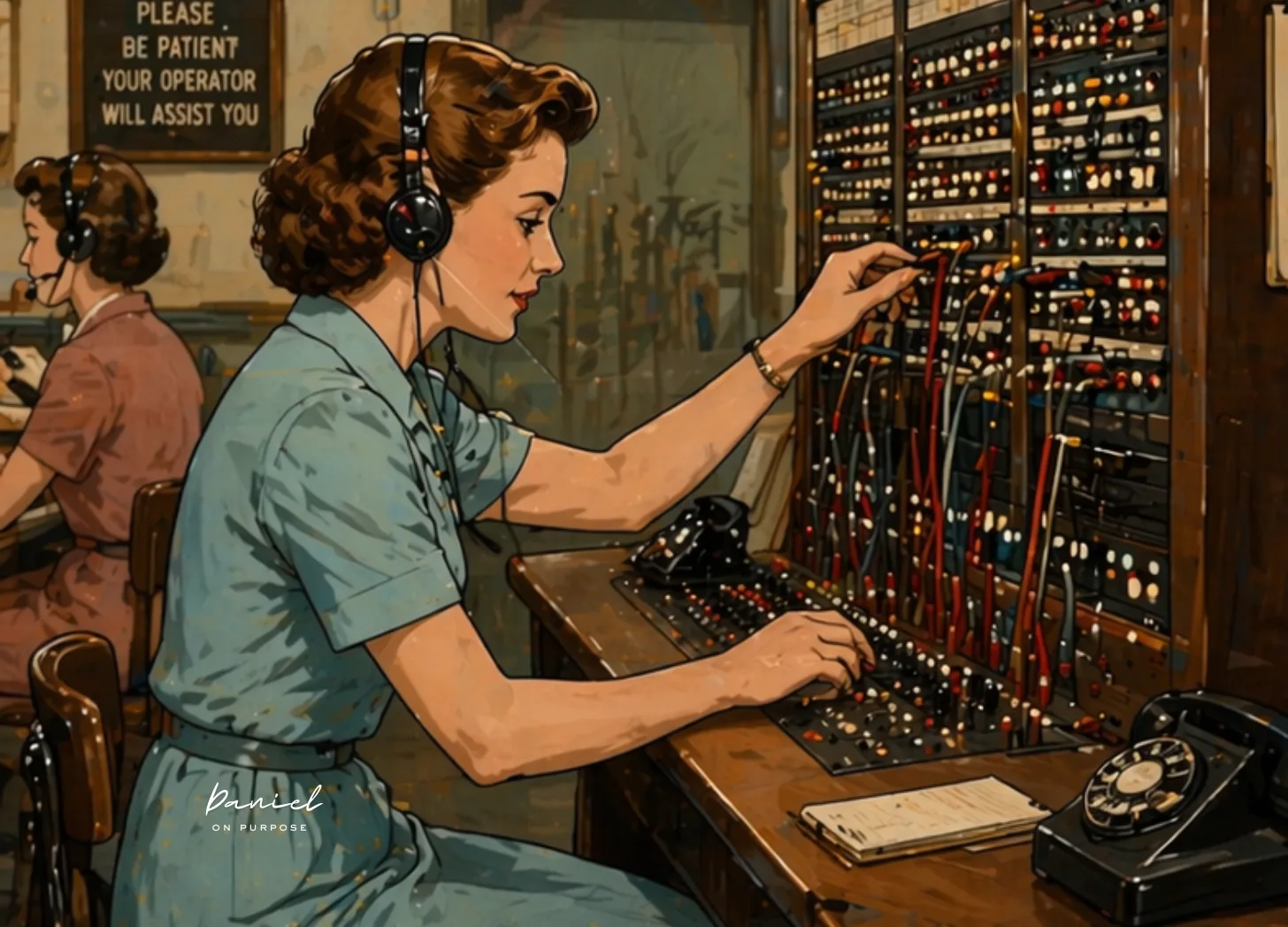
Back in the day, if you wanted to make a long distance call, you didn’t just dial a number. You had to dial zero and talk to an operator. A real person would manually connect your call by plugging lines into a switchboard.
That was their job.
Hundreds of thousands of people were doing this work. It was stable. It was local. It was part of the community.
Then technology replaced it.
Electronic switches came in, and within a relatively short period of time, those jobs were gone. Completely gone.
And people were understandably worried.
There was a lot of conversation about what was being lost. About the jobs, the stability, the impact on families and communities.
But what no one could really see at the time was what was coming next.
Because on the other side of that shift, something new was created.
Once long distance calls became essentially free, a whole new layer of business opened up. Toll-free numbers. 1-800 businesses. Entire companies built around the idea that people could now call without friction.
And behind that?
Call centers.

Support teams. Sales teams. Software companies built to serve those systems. Entire industries that didn’t exist before suddenly became normal.
Millions of jobs.
All created on the other side of something that originally looked like pure loss.
That’s the part that stuck with me.
Because it feels familiar.
We’re in a moment right now where AI is doing something similar. It’s replacing certain types of work. It’s changing how things get done. And there’s a lot of conversation around what’s going away.
And that part is real.
Things will change. Some roles will disappear. Some skills won’t be needed the same way they were before.
But I think the more interesting question is what’s on the other side.
What are the “call centers” of this moment?
What are the industries that don’t exist yet because this technology hasn’t fully played out?
That’s the part we can’t see clearly.
But we can start to get hints.
If long distance becoming free created an entire industry around communication, what does AI making thinking, writing, building, and problem-solving faster create?
What gets built on top of that?
I don’t have a perfect answer.
But I do know how I want to approach it.
I’m choosing to lean into it.
To learn it. To experiment with it. To stack tools and figure out where they fit into how I work and how I think. Not because I have it all figured out, but because I don’t want to be standing on the outside trying to catch up later.
The people who built those 1-800 businesses weren’t waiting for clarity.
They saw a shift and moved.
That’s the part that matters.
I think there’s going to be a version of that happening again. Maybe not in the exact same way, but in the same pattern.
Something changes. Something gets replaced.
And on the other side, something bigger gets built.
I’d rather be learning how to build in that environment now than trying to understand it after the fact.
Because even if we can’t see exactly what’s coming…
we can still choose how we show up for it.
If this resonated, the newsletter is where it continues — one honest email at a time.